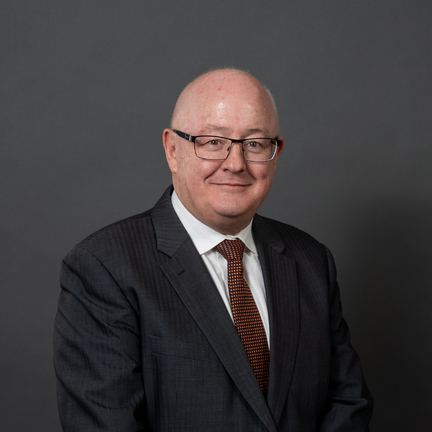
Michael Courtney
Welcome to Financial Year 2024/25!
Another financial year passes, and I thank our staff and Associates for their continued diligence, reliability and much needed skills offered to our appreciative clients.
In 2023/24 we continued to see growing demand for Associate Placements in Councils reflective of the diminishing skills in the sector.
In the areas of project management, asset management, service planning and condition assessments we continue to see increasing demands for professional services.
At the same time in Victoria, there are an increasing number of Councils with state government appointed monitors. Monitors have generally appointed to oversee governance and behavioural issues within Councils. There are approximately 14 monitors appointed in Victoria mainly engaged due to poor performance and behaviour of Councillors.
In Victoria the Local Government Amendment (Governance and Integrity) Act 2024 makes various amendments to the Local Government Act 2020 to support improved governance, accountability and councillor behaviour across the local government sector.
On Wednesday 25 June 2024, the Local Government Amendment (Governance and Integrity) Act 2024 (the Amendment Act) was given Royal Assent. The Amendment Act includes reforms to strengthen council leadership, capability and councillor conduct, improve early intervention and effective dispute resolution and strengthen oversight mechanisms.
The Amendment Act makes a range of changes to the Local Government Act 2020.These changes came into operation on 26 June 2024:
- The close of the roll for the October 2024 council elections has been brought forward to provide more time for councils and the VEC to compile voters’ rolls, and to accommodate other timeline changes through amendment regulations
- The Governor in Council, on the recommendation of the Minister, has the power to suspend an individual councillor or disqualify a person who has been dismissed from taking office if they have been found by a municipal monitor or Commission of Inquiry to have created a serious risk to health and safety or prevented the council from performing its functions.
- The Chief Municipal Inspector will have new powers, including the power to table reports in Parliament and issue infringements for minor offences.
Local Government Victoria has commenced work with the sector Steering Committee to develop the Regulations for the Model Councillor Code of Conduct and for Mayoral and councillor training.
We wish them well!
Issues around financial sustainability of Councils are topical.
On 12 March 2024, the Commonwealth House of Representatives Standing Committee on Regional Development, Infrastructure and Transport announced an inquiry and report on local government matters, with a particular focus on the following matters:
- The financial sustainability and funding of local government
- The changing infrastructure and service delivery obligations of local government
- Any structural impediments to security for local government workers and infrastructure and service delivery
- Trends in the attraction and retention of a skilled workforce in the local government sector, including impacts of labour hire practices
- The role of the Australian Government in addressing issues raised in relation to the above
- Other relevant issues. In this submission, we address these Terms of Reference in the order specified above.
Local Government is the only tier of government that has not received real growth in funding.
Australian Bureau of Statistics data from 2012-13 to 2021-22 (10-year period), highlights the inequity in the annual taxation revenue growth experienced by different levels of government:
- Australian Government – 65% growth
- Queensland Government – 74% growth
- Local Government Qld – 46% growth
Local Government does not have a growth tax like GST and In NSW and Victoria rate pegs and caps are legislated to restrict revenue/taxation growth.
The main issues presented to the Standing Committee in the 260 submissions received include:
Review of the Federal Assistance Grants
Australian Local Government Association (ALGA) (2022) has launched the most recent FAG system reform proposal. This proposed reform has four main elements:
- Firstly, FAG funding must be set at a level equivalent to at least one per cent of Commonwealth Tax revenue.
- Secondly, the indexation methodology of FAGs must reflect the real cost pressures on councils rather than simply the CPI.
- Thirdly, the 2006 Intergovernmental Agreement (IGA) designed to prevent cost shifting of federal and state government responsibilities onto councils must be renegotiated to address its current inadequacies.
- Finally, the base and indexation methodology of the FAG system must be thoroughly assessed and revised.
Address the infrastructure backlog
The question arises as to the best means of tackling the Australian local infrastructure backlog. Given the size of the shortfall, three generic possibilities exist:
(a) Greatly increased intergovernmental transfers;
(b) Much higher property taxes, fees and charges; and
(c) Much more borrowing.
Legislative constraints on fees and charges in most state jurisdictions, including NSW, together with acute political constraints on property tax hikes, as well as continued rate pegging in NSW and Victoria, mean that option (b) offers limited possibilities.
Ongoing and acute state and territory government budget constraints dampen the prospects of increased grant transfers at the state level.
ALGA’s 2021 National State of the Assets Report highlights that 10% of local government infrastructure assets are in poor condition and need attention. According to the Municipal Association of Victoria (MAV) in Australia, over the last decade, the Commonwealth for every $1 of revenue they collect, Victorian councils manage $10 of physical assets like parks, and roads and kindergartens. For the Victorian Government this figure is $4, and for the Commonwealth $0.40 has collected 81% of total tax revenue, the States and Territories 15.5% and local governments the remaining 3.5%. By comparison local governments manage 25% of public non-financial assets and states and territories 65% while the Commonwealth manages only 10%.
However, given the high degree of vertical fiscal imbalance in the Australian federation (Dollery 2002), the establishment of a permanent ongoing local government infrastructure fund by the Australian Government is perhaps feasible.
Expenditure per capita
Research commissioned by the Australian Local Government Association (ALGA) shows that over the past decade local government expenditure per capita has flatlined, while spending by other governments has continued to rise. This is despite additional responsibilities increasingly being forced onto local government by other spheres of government.
Cost Shifting
Cost-shifting to local government means that already limited funds and resources are being diverted to new services while existing community services and local facilities go unfunded. By international standards, investment in local government across Australia is low, and this is constraining local governments capacity to deliver core services, such as maintaining local roads and community infrastructure. In 2023 the Grattan Institute identified local governments needed an additional $1 billion per year to effectively maintain their roads.
The Grattan Institute also indicated that extra money, even if it’s better targeted, still won’t fix the problem. A Grattan survey of 81 councils found that “almost 40 per cent of councils do not have the long-term financial plans and asset management plans required by state legislation. And many lack basic data on their assets: a quarter do not know how many bridges they manage. These shortcomings prevent councils from getting the most out of the funding they do have. They arise because councils lack the staff, technology, and data to do better.”
Grant Funding
Local government grants from federal and state governments have fallen in real terms. Moreover, ‘this is compounded by the fact that grants have failed to keep pace with changing responsibilities.
Service Gaps
Local government has had to fill ‘the gap left by state and federal governments either withdrawing services or their failure to implement/provide services required by the community’. Furthermore, ‘local government has been required to “pick-up” services because of the direct transfer of “ownership” of infrastructure from another sphere of government’, such as aged care facilities in NSW.
Agency Fees
Fees imposed by higher levels of government have increased as ‘state and Commonwealth agencies have sought to recover a range of costs by increasing fees, license contributions and other charges imposed on councils.
Legislative Requirements
Australian local councils have faced ‘major increases in accountability and compliance requirements without adequate recognition of the attending costs. Moreover, ‘legislation has required councils to provide concessions and rebates, with no compensation payment’; ‘services have formally referred to, and/or have been assigned to local government through legislative and other state and/or federal instruments, without corresponding funding’; local councils have been required to be ‘the sole provider of essential/important local services’; new services that ‘have no historical funding precedent have been mandated’; and fees and charges that ‘local government is permitted to apply, for services prescribed under state legislation or regulation, have little if any correlation to the cost of providing the service’.
Workforce Planning
Lack of investment in workforce training and development, succession planning because of diminishing funds.
Conclusion
The upshot of this enquiry will be to see whether the $1billion increase in FAG untied funding requested by the Australian Local Government Association (ALGA) will firstly be agreed to and if so, make a significant difference to the abovementioned long-term issues.
It is certainly justified.
Again, thank you for your participation and professionalism during 2023/24.
We look forward to your ongoing professional services in 2024/25.