Malcolm McKenzie – National Placements Manager
Kerim Sijercic (Associate at Murrindindi) has attended a briefing by the Taungurung Land & Waters Council on referrals required under the Taungurung Land Use Activity Agreement.
This is one of two such agreements in place within Victoria with more likely to follow, the other being the Dia Dia Wurrung Land Use Activity Agreement. It effectively makes the Taungurung Land & Waters Council a referral authority for any works done on Crown Land and includes fees and timelines to be followed.
This information is provided to alert Associates who may be required to undertake project work on Crown land, to be aware of the requirements of these Agreements.
Overview
The Land Use Activity Agreement (LUAA) is part of the broader Settlement Package with the Dja Dja Wurrung and Taungurung Clans. In that package, the Clans agreed not to pursue the legal recognition of native title rights that they may hold through the national native title process, in return for a package of agreements, including the LUAA.
What is a Land Use Activity Agreement?
A Land Use Activity Agreement (LUAA) is a sub-agreement under the Recognition and Settlement Agreement. Both agreements form part of a settlement package between the State and Traditional Owners under the Traditional Owner Settlement Act 2010 (Vic).
A LUAA specifies the types of land use activities that may be carried out on or affecting Public Land in the Agreement area, and the level of consultation or negotiation required with traditional owners (routine, advisory, negotiation or agreement). The LUAA also outlines a formula for the payment of community benefits to traditional owners for certain negotiation and agreement activities.
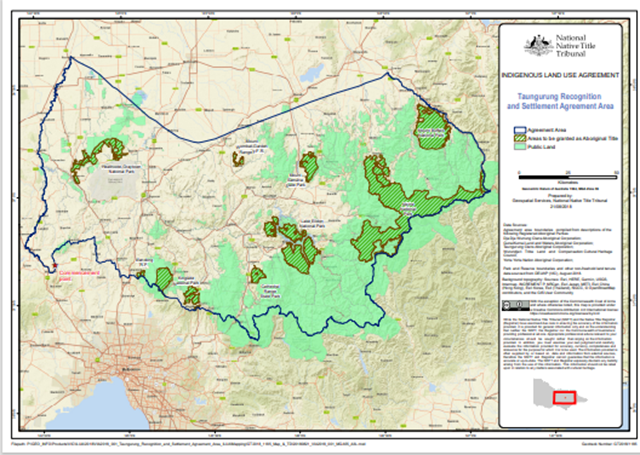
Taungurung Land Use Activity Area
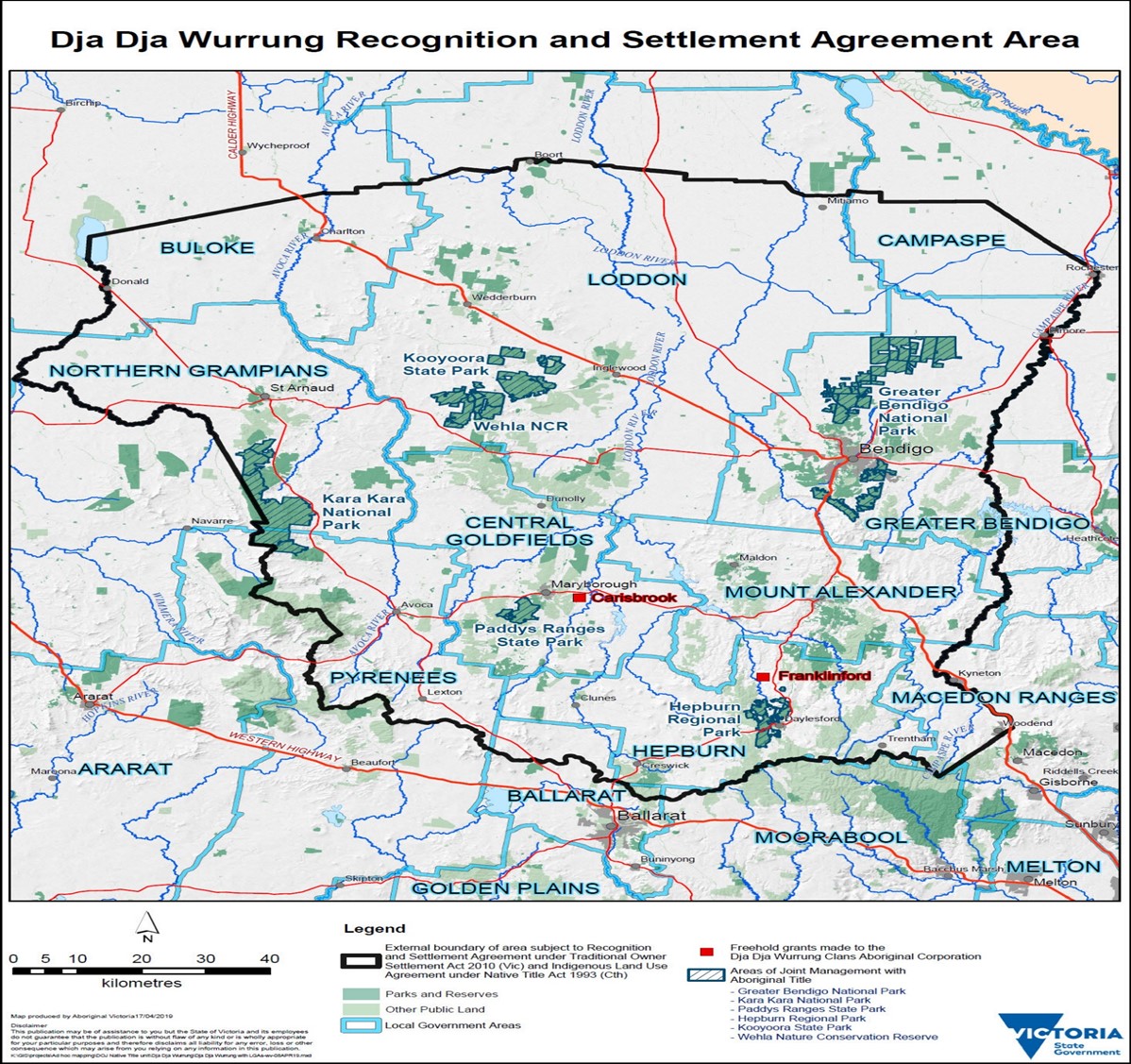
Dja Dja Wurrung Land Use Activity Area
The Traditional Owner Settlement Act 2010 requires that proposed activities on public land (often called ‘Crown’ land) must comply with the LUAA. Part 4 of the TOS Act, as well as the LUAA, sets out the processes that managers of public land must follow when wishing to deal with, or carry out works on that land. These processes are simpler and more streamlined than the equivalent processes under the Native Title Act, benefiting both parties.
The LUAA gives strong procedural rights to the Dja Dja Wurrung and Taungurung when proposed activities have a greater impact on their rights as recognised Traditional Owners. These procedural rights are separate from any requirements that may arise under the Aboriginal Heritage Act
A new relationship
Local governments regularly seek to consult with stakeholders in their communities, including Aboriginal people. However, the Recognition and Settlement Agreement established a different kind of relationship between government and the Dja Dja Wurrung and Taungurung people.
Compliance processes
All Crown land managers (including local governments) must ensure that they are complying with the LUAA in relation to land that they manage.
Who is responsible for complying with the LUAA?
Two key questions
To determine what (if anything) the LUAA requires before a land manager can carry out a “land use activity” on Crown land, there are two main questions.
- Does the LUAA apply to this land?
- Is the land “public land” (reserved or unreserved Crown land)?
- Is it within the LUAA area?
- Is it excluded from the operation of the LUAA for one of several listed reasons, including the existence of certain kinds of infrastructure?
- What kind of activity is it?
- Routine: No action needed
- Advisory: Notification and consultation process
- Negotiation: Negotiation process. VCAT and the minister can break deadlocks after 6 months
- Agreement: Negotiation process. The activity can only proceed with DDWCAC agreement; this category is unlikely to be relevant to decisions within local government jurisdiction
Each type of activity has specific processes, together with mandatory or recommended templates.
The Register of Land Use Activity Agreements comprises the following agreements that commenced on the dates given:
- Land Use Activity Agreement – Dja Dja Wurrung – 25 October 2013
- Land Use Activity Agreement – Taungurung – 11 August 2020